
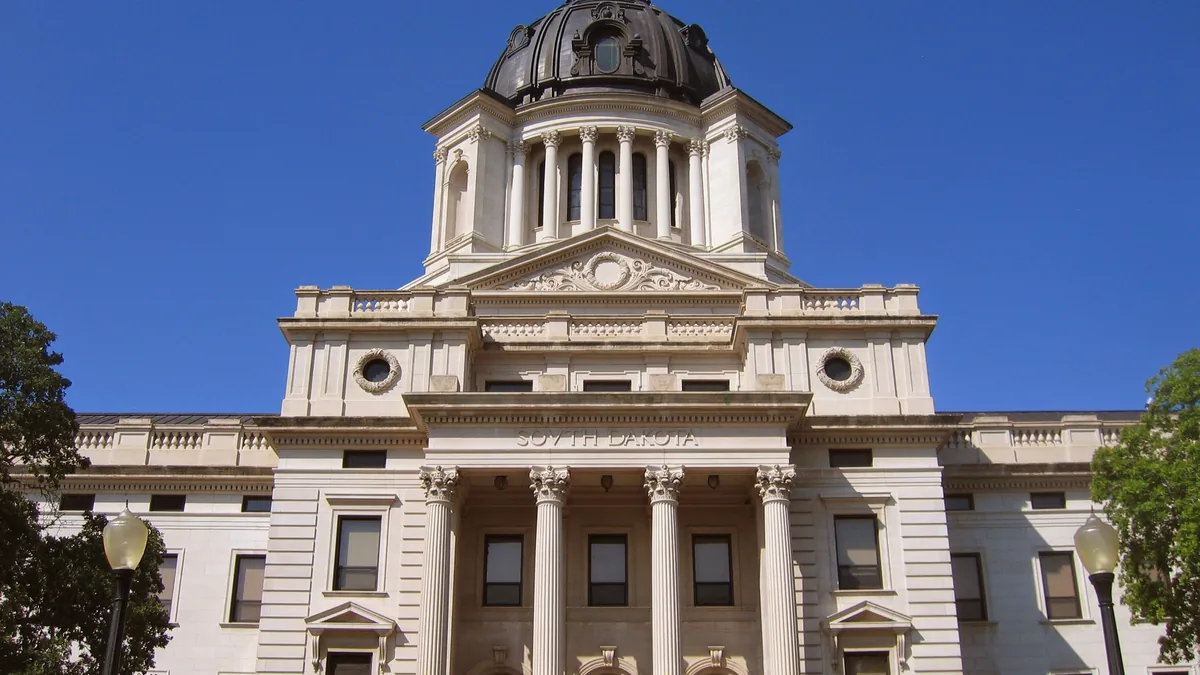
Community Health Centers (FQHC) in South Dakota
South Dakota at a glance
South Dakota is home to about 35,988 foreign-born residents (4.0% of the state’s 907,428 people) and 43,777 residents of Hispanic or Latino origin (4.8%), per the U.S. Census Bureau’s American Community Survey (2024 5-year estimates). The procedures below apply to everyone in South Dakota regardless of immigration status unless noted.
Federally Qualified Health Centers (FQHC) are the most important low-cost medical care network in US for uninsured or underinsured people. They serve EVERYONE regardless of immigration status.
How FQHCs work — the short version
A Federally Qualified Health Center is a community clinic that receives a grant under Section 330 of the Public Health Service Act, or that HRSA has determined meets the requirements for one. Three things matter in practice: every site must serve you regardless of immigration status, fees follow a sliding scale based on income (a pay stub is usually enough proof), and most South Dakota locations put primary care, pediatrics, dental, mental health, and a low-cost pharmacy under one roof. No insurance is required, and in areas with large Spanish-speaking populations, bilingual staff are the norm.
For other states, see the national community health centers guide.
Important: Public Charge Rule
Under the 2022 public-charge rule, using an FQHC does not affect your immigration case — that rule does not consider low-cost medical services. ⚠️ It is rescinded effective September 18, 2026 (91 FR 45324); care received before that date is still judged under the 2022 rule, and receiving benefits is never outcome-determinative on its own. DHS says the new rule applies to applications for admission made on or after September 18, 2026, and to adjustment-of-status applications postmarked or electronically submitted on or after that date. See the public charge guide.
FQHC locations in South Dakota: the real numbers
South Dakota has 41 active federally funded health center sites, per HRSA's Health Center Service Delivery Sites file. Every one of them is required to serve you regardless of immigration status or ability to pay. The cities with the most locations:
| City | FQHC sites |
|---|---|
| Sioux Falls | 5 |
| Howard | 3 |
| Rapid City | 2 |
| Wessington Springs | 2 |
| Martin | 2 |
Coverage by county
| County | Sites |
|---|---|
| Minnehaha | 5 |
| Miner | 3 |
| Dewey | 3 |
| Union | 3 |
| Lyman | 2 |
| Pennington | 2 |
| Jerauld | 2 |
| Bennett | 2 |
Major health center sites you can call today
| Health center site | City | Phone |
|---|---|---|
| Access Health - Mitchell | Mitchell | (605) 995-7000 |
| Horizon Health - Mission | Mission | (605) 856-4703 |
| Access Health - Brookings | Brookings | (605) 697-9500 |
| Horizon Health - Howard Medical | Howard | (605) 772-4574 |
| Horizon Health - Martin Medical | Martin | (605) 685-6868 |
| Horizon Health - Huron | Huron | (605) 554-1015 |
| Horizon Health - Wessington Springs Medical | Wessington Springs | (605) 539-1767 |
| Main Clinic | Rapid City | (605) 721-8939 |
Source: HRSA Health Center Service Delivery and Look-Alike Sites (retrieved 2026-10-07; refreshed quarterly). Hours and walk-in policies change — call before visiting, or search every site at findahealthcenter.hrsa.gov.
Related information
- Medicaid in South Dakota
- CHIP in South Dakota
- Free hospital care in South Dakota
- Public Charge Rule
- SNAP in South Dakota
Last verified: 2026-09-24.
General information, not medical advice. For specific care, talk to a medical provider.
Last verified: 2026-09-24.
General procedural information for educational purposes. Not legal, tax, or immigration advice. Laws and fees change — verify with the issuing agency before taking action. For case-specific guidance, consult a licensed immigration attorney or other appropriate professional.
Related procedural information
- Federal benefits eligibility by immigration status — who qualifies for what
- Find legal aid in your state — public-benefits appeals
- What an ITIN is and is not — an ITIN is a tax-filing number, not proof of eligibility for any benefit; each program sets its own identity and status rules
- Consulate of your country — many offer financial-assistance referrals
- Know Your Rights — public-benefits enrollment — agency confidentiality limits