
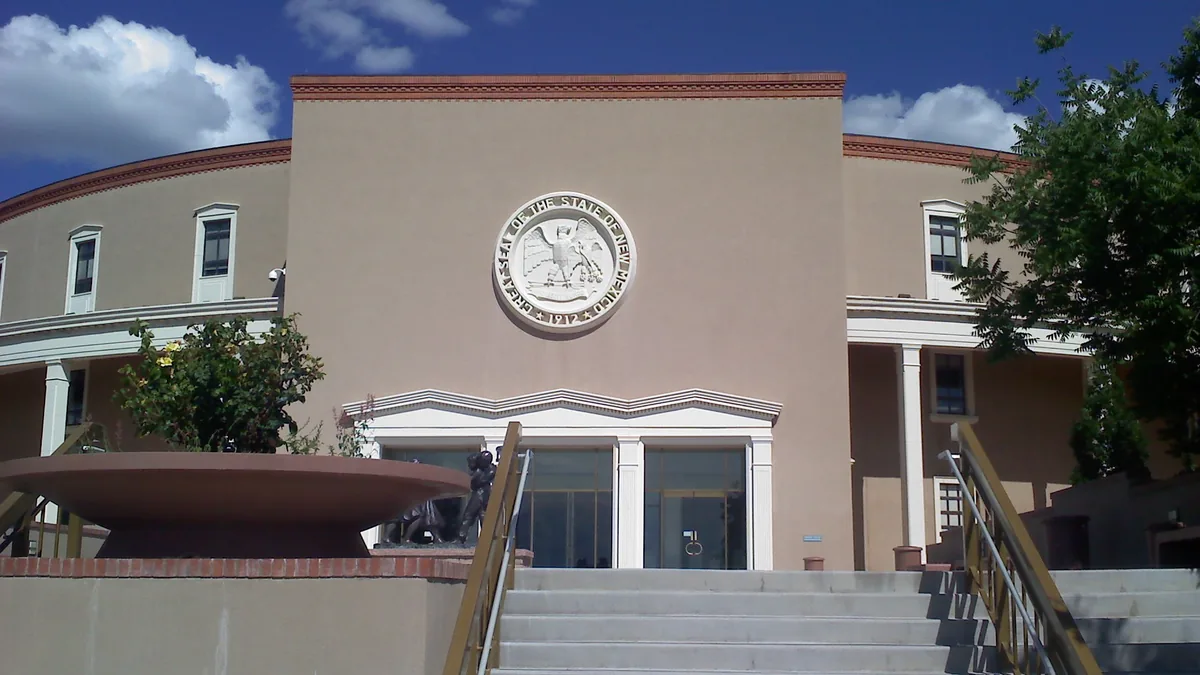
FREE or low-cost hospital care in New Mexico
New Mexico at a glance
New Mexico is home to about 199,738 foreign-born residents (9.4% of the state’s 2,120,246 people) and 1,026,614 residents of Hispanic or Latino origin (48.4%), per the U.S. Census Bureau’s American Community Survey (2024 5-year estimates). The procedures below apply to everyone in New Mexico regardless of immigration status unless noted.
If you live in New Mexico and need medical care but DON’T have insurance and CAN’T pay, there are multiple programs to help.
| Hospital charity-care law — New Mexico | |
|---|---|
| State law? | Yes — Patients' Debt Collection Protection Act (NMSA 1978, §§57-32-1 to 57-32-10); covers: all health-care facilities and medical-debt collectors |
| What it means | New Mexico bans all collection actions — lawsuits, wage garnishment, liens, debt sales, credit reporting — against patients with household income at or below 200% of the federal poverty guidelines. Patients can prove eligibility with a simple self-attestation form. A collections shield rather than a mandate to grant free or discounted care. |
| Verify | www.osi.state.nm.us |
State laws verified 2026-06-10. Charity-care laws are actively changing — confirm the current rule with the hospital before making decisions.
Your LEGAL rights in New Mexico
EMTALA — Emergency Medical Treatment and Labor Act
Federal law requires ALL hospitals with emergency rooms to:
- Examine anyone arriving with emergency
- Stabilize emergency BEFORE any payment consideration
- CANNOT ask immigration status before treating
- CANNOT demand payment before stabilizing
This INCLUDES childbirth. If you arrive in labor, they must treat you.
Nonprofit hospitals and Charity Care (IRS Section 501(r))
Nonprofit hospitals (most in New Mexico) MUST, by federal law:
- Have a published financial assistance policy
- Offer discounts to low-income patients
- NOT charge more than “amounts generally billed” (AGB) to eligible patients
- Notify patient about Charity Care BEFORE sending bills to collections
Common Charity Care programs
Income-based sliding scale discounts
Federal rules (IRS, Section 501(r)(4)) require each nonprofit hospital facility to have its own written Financial Assistance Policy, so free-care and discount levels differ from hospital to hospital. Ask the hospital’s billing office for its policy; any income threshold set by state law is in the table above.
How to apply
- Request application at hospital billing department
- Application form — length varies by hospital
- Documents: the ones the hospital’s financial assistance policy or application form lists — for example income proof (W-2, 1099, paystubs, ITIN tax return) and household size
- Each hospital sets its documents — under the federal 501(r) rules, a nonprofit hospital may deny aid for missing information only if its FAP or application form asks for it
- Applies retroactively — if you receive bill, can apply AFTER treatment
Timeline
- At least 240 days from the first bill after discharge — the federal 501(r) minimum application window
- If your bill is already in collections, you can STILL apply
Public / safety net hospitals in New Mexico
Large states have public hospital systems treating everyone regardless of ability to pay:
- County hospitals
- Public Hospital Districts
- Veterans Administration (veterans only)
- Indian Health Service (Native Americans)
Ask each hospital about its financial assistance policy and its language-assistance services.
Community Health Centers (FQHC)
See: Community Health Centers in New Mexico
If no emergency (routine care)
- Medicaid (if eligible): /benefits/medicaid/new-mexico/
- CHIP for your kids: /benefits/chip/new-mexico/
- Marketplace plans (healthcare.gov) — note: DACA recipients were briefly eligible under a 2024 rule, but a 2025 federal rule excluded them again
- FQHC sliding scale (Federally Qualified Health Centers)
- Free clinics — search in your area
- Dental/vision services at medical/dental schools (low prices)
What to do if you receive an impossible medical bill
- DON’T IGNORE — leads to collections and credit damage
- Call hospital and ask for “Financial Assistance Application” or “Charity Care application”
- Negotiate — ask the billing office whether it will accept a reduced amount
- Ask about a payment plan — and whether it charges interest
- Apply for financial assistance before paying — if a nonprofit hospital finds you eligible on an application filed within its application period, federal 501(r) rules require it to refund what you paid above your discounted amount, unless that excess is less than $5 (or another amount the IRS sets in published guidance), per 26 CFR 1.501(r)-6(c)(6)
- Consult pro bono attorney if threatened with garnishment
Resources
- National Center for Medical Legal Partnership
- Dollar For — organization helping with Charity Care applications FREE
- Patient Advocate Foundation — patient support with bills
- NAFC Free Clinics — directory of free clinics in New Mexico
Related information
- Medicaid in New Mexico
- CHIP in New Mexico
- Community Health Centers in New Mexico
- SNAP in New Mexico
- Public Charge Rule
Last verified: 2026-09-24.
General information, not medical or legal advice. For specific situations, talk to a Patient Advocate or insurance attorney.
Related procedural information
- Federal benefits eligibility by immigration status — who qualifies for what
- Find legal aid in your state — public-benefits appeals
- What an ITIN is and is not — an ITIN is a tax-filing number, not proof of eligibility for any benefit; each program sets its own identity and status rules
- Consulate of your country — many offer financial-assistance referrals
- Know Your Rights — public-benefits enrollment — agency confidentiality limits