
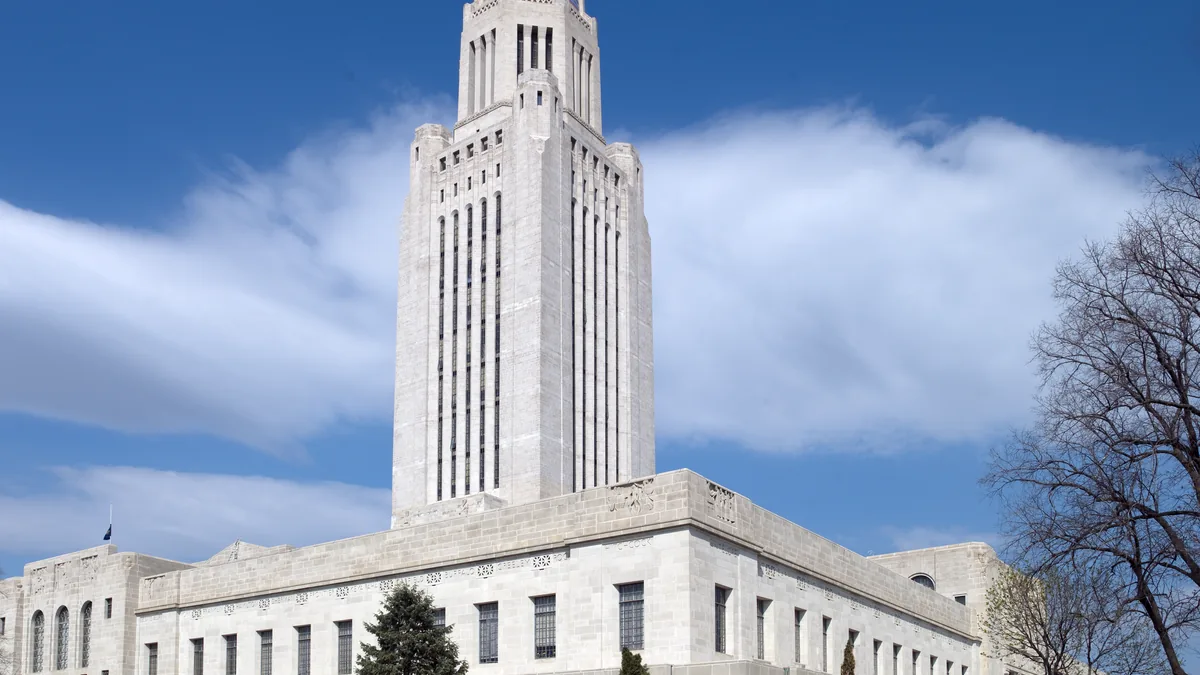
Medicaid in Nebraska
Medicaid income limits in dollars
Medicaid limits are expressed as percentages of the Federal Poverty Level (FPL). These are the 2026 FPL figures that apply in Nebraska:
| Household size | 100% FPL | 138% FPL | 200% FPL | 400% FPL |
|---|---|---|---|---|
| 1 | $15,960 | $22,025 | $31,920 | $63,840 |
| 2 | $21,640 | $29,863 | $43,280 | $86,560 |
| 3 | $27,320 | $37,702 | $54,640 | $109,280 |
| 4 | $33,000 | $45,540 | $66,000 | $132,000 |
| 5 | $38,680 | $53,378 | $77,360 | $154,720 |
| 6 | $44,360 | $61,217 | $88,720 | $177,440 |
| 7 | $50,040 | $69,055 | $100,080 | $200,160 |
| 8 | $55,720 | $76,894 | $111,440 | $222,880 |
48 contiguous states + DC — for each additional person above 8, add $5,680 (at 100% FPL). Source: HHS Poverty Guidelines 2026 (Federal Register 2026-00755), effective January 13, 2026 · verify at federalregister.gov
What that means in dollars — Nebraska
- Parents (family of 3): eligible for Medicaid with annual income up to $37,702 (138% of the $27,320 FPL for 3 persons)
- Childless adults: eligible with annual income up to $22,025 (138% of the $15,960 FPL for 1 person)
Eligibility percentages: KFF (Kaiser Family Foundation). Dollar figures recompute automatically each year from the HHS guidelines.
Medicaid eligibility limits in Nebraska (verified data)
Source: Kaiser Family Foundation (KFF) — Medicaid data by state
Verified on: 2026-05-25
ACA expansion status in Nebraska
✅ Nebraska ADOPTED Medicaid expansion under the Affordable Care Act.
Income limits for Medicaid in Nebraska
- Parents in a family of 3: up to 138% of Federal Poverty Level (FPL)
- Other adults (childless): up to 138% FPL
- Pregnant women: up to 199% of FPL (Medicaid)
Calculate your FPL for household size at aspe.hhs.gov/poverty-guidelines.
Verify eligibility
⚠️ Limits change annually. Verify current eligibility with Nebraska’s Medicaid agency or at healthcare.gov.
Medicaid expansion
Nebraska HAS adopted ACA Medicaid expansion.
This means low-income adults up to 138% of federal poverty level can qualify for Medicaid in Nebraska, regardless of having dependent children or disability.
Coverage for undocumented individuals
Nebraska does fund some health coverage regardless of immigration status. Here is what the state pays for on its own, on top of what exists in every state:
| Children | No state program |
|---|---|
| Adults | No state program |
| Prenatal care | Available regardless of status |
| In every state | Emergency Medicaid (hospitals treat emergencies, including labor and delivery, regardless of status) and community health centers (FQHCs), which serve you regardless of status or ability to pay. |
Source: KFF (per-state lists as of April 2026) and NILC (March 2026). Compare all 51 states and jurisdictions in our coverage-by-state table. State programs change with every budget — confirm with Nebraska's health agency before deciding.
Federal rules applying in Nebraska
Regardless of expansion, federal eligibility rules by immigration status apply in Nebraska:
- Citizens: YES qualify
- Permanent residents (green card) 5+ years: YES qualify
- Permanent residents < 5 years: NO (5-year bar), EXCEPT children and pregnant women in CHIPRA Option states
- Refugees, asylees: YES qualify (no 5-year bar) through September 30, 2026. Beginning October 1, 2026 federal money no longer pays for their full Medicaid: section 71109 of Public Law 119-21 limits federal financial participation to US citizens and nationals, lawful permanent residents, Cuban/Haitian entrants and COFA migrants, and CMS names “asylees, refugees, parolees, or victims of trafficking” as the groups losing it (CMS letter SHO #26-001). Emergency Medicaid is unchanged, and children and pregnant women can still be covered where the state elected the CHIPRA 214 option
- DACA: NO qualify (excluded by current rule)
- Undocumented individuals: NO qualify federally
Emergency services
Under EMTALA, all hospitals in Nebraska must treat medical emergencies regardless of immigration status. Emergency Medicaid may cover the cost of treating an emergency medical condition for people who meet the other Medicaid requirements that apply in Nebraska — income, household and state residency — but not the immigration-status requirement (42 U.S.C. 1396b(v)(2); 42 CFR 440.255(c)).
How to apply for Medicaid in Nebraska
- Visit Nebraska’s Medicaid portal (search “Nebraska Medicaid” or specific program name)
- Fill application online (also available by paper or in person)
- Provide: identification, proof of income, proof of residency, immigration documents (if applicable)
- Wait for the decision — federal rules set a deadline, not a typical time: the agency must determine eligibility within 45 days, or within 90 days if you applied on the basis of disability (42 CFR 435.912(c)(3)). Those limits may be exceeded only in unusual circumstances, such as a delay by the applicant or an examining physician (42 CFR 435.912(e))
- If approved, receive Medicaid card + provider information
Related information
Last verified: 2026-09-24.
Related procedural information
- Federal benefits eligibility by immigration status — who qualifies for what
- Find legal aid in your state — public-benefits appeals
- What an ITIN is and is not — an ITIN is a tax-filing number, not proof of eligibility for any benefit; each program sets its own identity and status rules
- Consulate of your country — many offer financial-assistance referrals
- Know Your Rights — public-benefits enrollment — agency confidentiality limits