
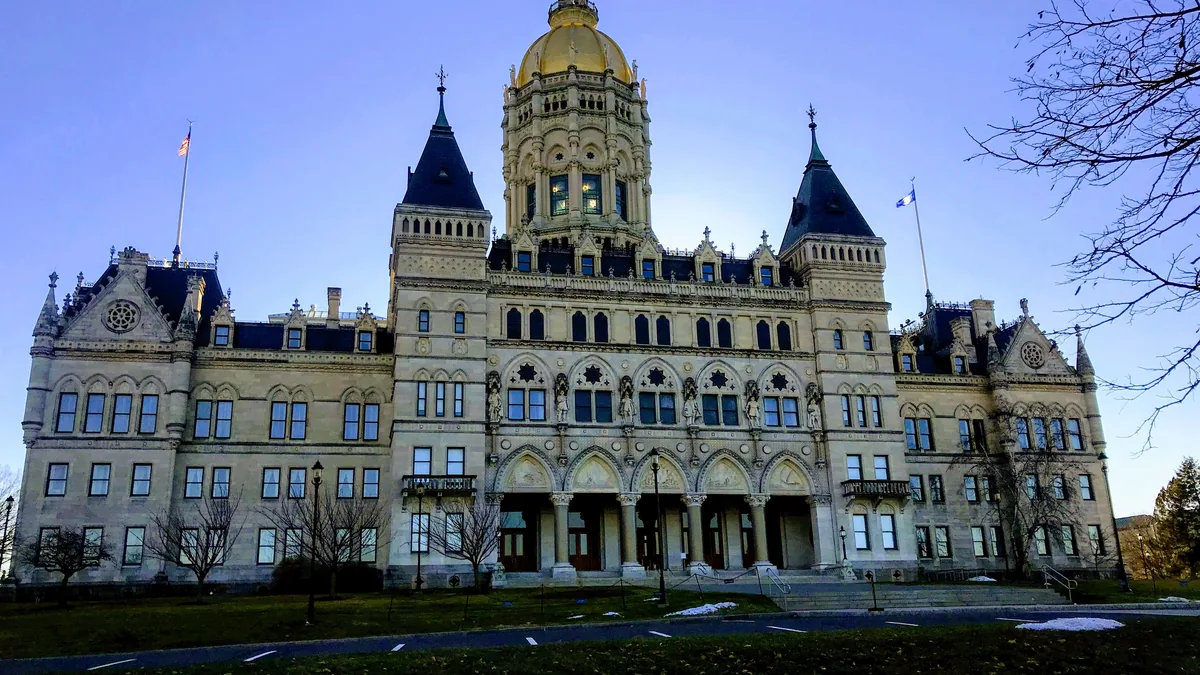
Latin American consulates in Connecticut
Connecticut hosts 2 Latin American consular offices on our list — the Peru Consulate-General in Hartford and the Ecuador Consulate in New Haven, whose jurisdiction Ecuador’s foreign ministry lists as Connecticut, Maine, Rhode Island, Vermont, New Hampshire and Massachusetts (directory read 2026-10-15). For services not covered by the resident consulates, neighboring states (New York, Massachusetts, Rhode Island) host additional missions.
Hispanic demographic context
Connecticut has the growing Hispanic population (~600,000, ~17% of state population). Top diaspora groups: Puerto Rican, Mexican, Ecuadorian, Peruvian. Consular service demand is correspondingly high.
Consulates located in Connecticut
Ecuador
Peru
Common consular services
Hispanic-country consulates in the US typically offer the services below. Specifics vary by country and by consulate — confirm on the official website before scheduling:
- Passport renewal and new issuance (fees vary by country, roughly $50-$209 — see each country’s passport guide for the verified figure)
- Consular ID — issued by some countries’ consulates (Mexico’s matrícula consular is the most widely recognized; fees vary by country); accepted by many US banks for ITIN account opening and some state DMVs for driver license without SSN)
- Birth registration of US-born children (dual nationality; the fee varies by country — confirm with the consulate)
- Powers of attorney for property/business matters in the home country
- Document apostille and certification (see also US apostille process)
- Voting from abroad when applicable (each country sets its own rules)
- Consular protection in emergencies, hospitalizations, arrests, or deaths
Privacy and confidentiality
Consulates are not part of US immigration enforcement; we found no official source on whether or how a consulate shares its users’ records with US agencies, so we make no claim either way. Be precise about what the Vienna Convention on Consular Relations (1963) does: it makes consular premises and archives inviolable against the receiving State, so US authorities cannot enter the consular working areas or seize consular files without consent. It does not stop a consulate from disclosing information voluntarily, and it is not a privacy promise made to you. Bring only the documents the procedure requires. Your immigration status in the US does not affect your right to consular services as a citizen of your home country.
Related information
- All Latin American consulates by country
- Connecticut DMV for immigrants
- Connecticut state benefits eligibility
- Connecticut state taxes for ITIN filers
- Apostille and document authentication
- Find pro bono immigration legal help
Authoritative sources
- US Department of State list of foreign consular posts: travel.state.gov
- Vienna Convention on Consular Relations (1963)
- Each consulate’s official Ministry of Foreign Affairs website
Last verified: 2026-09-10. General procedural information for educational purposes. Consulate addresses, fees, and hours change. Verify directly with the relevant consulate before traveling. Not legal, tax, or immigration advice.
Related procedural information
- ITIN — tax filing without SSN — for people with a US filing or reporting obligation who aren’t eligible for an SSN
- DMV driver’s licenses by state — license rules vary by state for non-US citizens
- ITIN-friendly US bank accounts — checking accounts that open without an SSN
- State immigration courts (EOIR) — find judges, Webex links, telephonic access
- Find immigration attorney — pro bono lists, AILA, BIA-recognized providers