
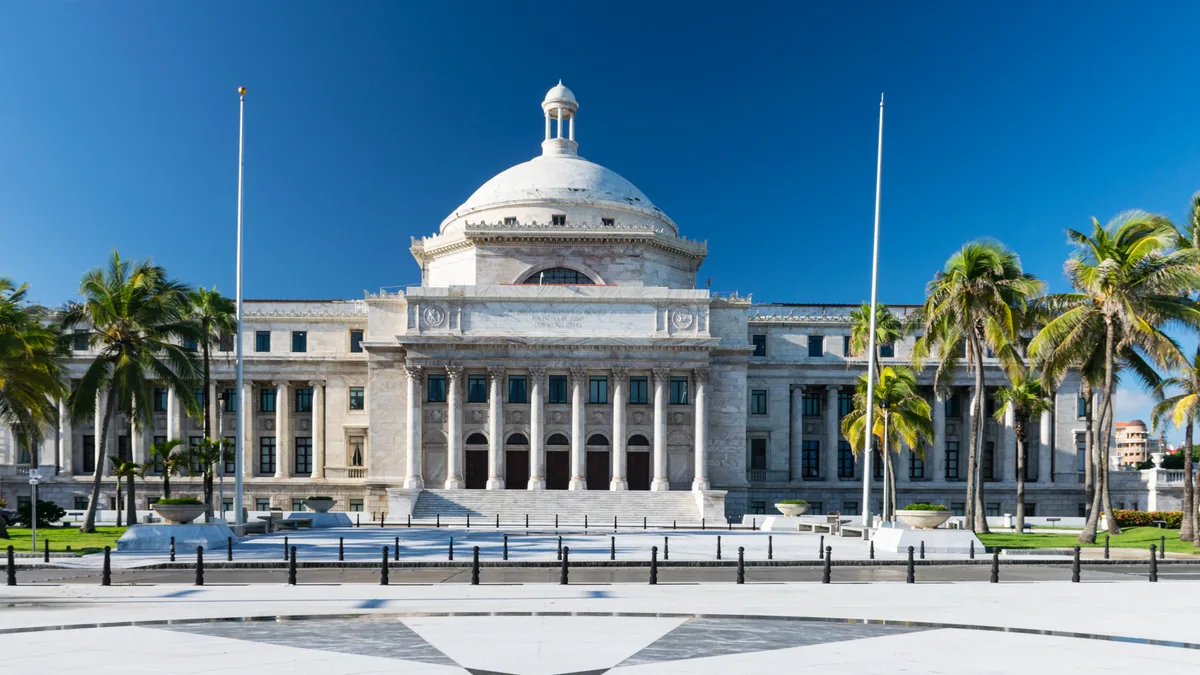
Driver’s license in Puerto Rico
Procedural guide on how to obtain or renew a driver’s license in Puerto Rico as an immigrant in the United States. Includes REAL ID information, minimum ages, typically accepted documents, and whether the state allows licenses for undocumented individuals.
Key facts
| Item | Information |
|---|---|
| Issuing agency | Puerto Rico DMV |
| Minimum age (full license) | Check with DMV |
| License validity | Generally 4-8 years, varies |
| REAL ID certification | October 1, 2018 |
| Allows undocumented license | Yes — provisional license, Ley 97-2013 |
REAL ID compliance
REAL ID is a federal identification standard, and enforcement at airport checkpoints began on May 7, 2025 (6 CFR 37.5(b)). Arriving without a REAL ID compliant license/ID or another acceptable ID (US passport, permanent resident card, EAD Form I-766, foreign passport) no longer means you are simply turned away: since February 1, 2026, TSA says that if you cannot present an acceptable ID, “you will have the option to pay a $45 fee to use TSA ConfirmID. TSA will then attempt to verify your identity so you can begin the airport security screening process.” TSA puts that check at “an average of 10-15 minutes; however, it could take 30 minutes or more” — and if TSA cannot verify your identity, you are not allowed through. Federal agencies may also still be phasing enforcement in, and must reach full enforcement no later than May 5, 2027 (6 CFR 37.5(d)(4)).
Puerto Rico was REAL ID certified: October 1, 2018
To obtain a REAL ID compliant license in Puerto Rico, you generally need:
- Proof of identity: current passport, certified birth certificate, or equivalent document
- Social Security Number (SSN card, or a W-2, SSA-1099, non-SSA-1099 or pay stub showing it); an applicant using a foreign passport with a U.S. visa and I-94 may instead show that they are not authorized to work
- Two proofs of Puerto Rico residency (utility bills, lease, pay stubs)
- Proof of lawful immigration status (green card, valid visa, EAD)
Undocumented individuals cannot obtain a REAL ID compliant license. In states that allow undocumented licenses, that license has a visible mark (“Not for Federal Identification” or similar) and does NOT serve as REAL ID.
Driver’s license for undocumented residents
Puerto Rico DOES allow people without official immigration status to obtain a driver’s license, under Ley Núm. 97-2013 (signed August 7, 2013), which amended the Puerto Rico Vehicle and Traffic Act. The license issued is a provisional driver’s license (licencia de conducir provisional), requested on form DTOP-DIS-312.
To qualify you generally must:
- Have resided in Puerto Rico for more than one (1) year
- Not have a Social Security number
- Already hold a provisional learner’s permit (the written exam, taken at DTOP/CESCO)
- Present a valid passport from your country of citizenship, or a valid consular ID issued by your country’s consulate — the consular ID must carry your name, date of birth, photo and signature plus issue and expiration dates, be certified by the consular authority, and be translated into Spanish or English
⚠️ This license is valid only in Puerto Rico. It is not proof of legal residence and it is not a passport. According to Puerto Rico legal-aid guidance, using it to travel to the mainland United States exposes you to deportation risk — do not treat it as a travel document. It is also not REAL ID compliant.
Typically required documents
Regardless of immigration status, most state DMVs require documents in these categories:
- Identity (one of): current passport, certified birth certificate, consular ID (matrícula consular in some states)
- Social Security Number (when applicable): SSN card, W-2 form, pay stub, or SSA denial letter
- Puerto Rico residency (two recent dated proofs): utility bill, lease agreement, bank statement, tax return
- Lawful immigration status (when applicable): green card, valid visa, I-94, EAD
How to find the Puerto Rico DMV
For hours, office locations, appointments, and current document requirements verification:
→ Search “Puerto Rico DMV” on Google or visit the state’s official site.
Frequently asked questions
Can I drive in Puerto Rico with my foreign license?
In most states, yes — temporarily. Visitors can generally drive with a valid foreign license; once you become a resident, states give you only a short window to switch to a state license (in California, 10 days), so check your state’s rule.
Do they accept matrícula consular as identification?
It depends which credential you are applying for. For a standard, REAL ID-compliant license, Puerto Rico requires lawful immigration status and a matrícula consular does not substitute for it. Puerto Rico also issues a provisional license under Ley 97-2013 (form DTOP-DIS-312) — see the license-options table on this page for what that credential requires. Confirm the current document list with CESCO before your appointment.
How much does the license cost?
Fees vary by license type and validity period. Check the current fee schedule on the official Departamento de Transportacion y Obras Publicas (DTOP) / CESCO website — that is the authoritative, up-to-date source.
How long does getting the license take?
If you pass all exams, ask the DMV whether it issues a temporary license the same day and how long the permanent card takes to arrive by mail — both vary by state.
What happens if I drive without a license?
In Puerto Rico, driving without a valid license is a civil or criminal infraction depending on circumstances. Consequences can include: fine, vehicle impoundment, arrest, and for undocumented individuals, potential ICE contact.
Last verified: 2026-09-24. General information — not legal advice. DMV rules change; always verify with the Puerto Rico DMV before your visit.
Related procedural information
- Consulates of your country in the United States — passport renewal, consular ID, document apostille
- ITIN: tax filing without SSN — for people with a US filing or reporting obligation who aren’t eligible for an SSN
- ITIN-friendly US bank accounts — check accounts open without SSN
- State IDs by state — non-driving identification options
License and ID options available in Puerto Rico
| License or ID type | Available in Puerto Rico | Status required | Fee range | Notes |
|---|---|---|---|---|
| Standard driver’s license (Class C/D/E) | ✅ YES | Lawful immigration status required (unless undocumented license below applies) | See the official fee schedule | Default for most adults. Renews every 4-8 years. Most common identification document for adults. |
| REAL ID compliant license | ✅ YES | Lawful status required + proof of identity, SSN, two proofs of residence | See the official fee schedule | Since May 7, 2025, TSA asks for a REAL ID or another acceptable ID (such as a passport) on domestic flights; without one you can pay $45 for TSA ConfirmID identity verification, which TSA says it cannot guarantee. Star symbol on top right. |
| Driver’s license for undocumented residents | ✅ YES | >1 year PR residency, no SSN, provisional learner’s permit, valid passport or certified consular ID | See the official fee schedule | Provisional license under Ley 97-2013 (form DTOP-DIS-312). Valid only in Puerto Rico — not REAL ID, not a travel document. |
| State ID (non-driving) | ✅ YES | Lawful presence required in most states — only 19 states + DC issue a credential without it (NCSL), and not all of those extend it to the non-driving ID card | See the official fee schedule | For people who don’t drive. Same identity-verification requirements as license. |
| Enhanced Driver’s License (EDL) | ❌ NO | US citizens only | N/A | Only available in MI, MN, NY, VT, WA — use a US passport card or passport instead in Puerto Rico. |
| Commercial Driver’s License (CDL) | ✅ YES (Class A, B, C) | SSN REQUIRED by federal law (49 CFR 383.153) + lawful status | See the official fee schedule | For driving commercial vehicles (semi-trucks, buses, hazmat). Subject to federal medical certification, drug/alcohol testing. ITIN does NOT qualify for CDL — must have SSN. Non-domiciled CDLs are federally restricted: FMCSA’s final rule (published February 13, 2026, effective March 16, 2026, reaffirming its September 29, 2025 interim final rule) limits eligibility for non-domiciled Commercial Learner’s Permits and CDLs, for foreign-domiciled individuals, to those who hold specific, verifiable employment-based nonimmigrant status. A separate FMCSA exemption granted May 14, 2026 lets any state issue one to a citizen of the Marshall Islands, Micronesia or Palau who resides in the United States and holds a valid, unexpired Freely Associated State passport and a Form I-94 or I-94A. |
| Motorcycle license (Class M) | ✅ YES | Same as regular license | See the official fee schedule | Usually an endorsement on regular license. Testing rules vary by state; some states (e.g., Idaho, California) let an approved rider-safety course waive the skills test. |
| Learner’s permit | ✅ YES | Minimum age is set by Puerto Rico law — confirm the current figure with CESCO; a parent or sponsor normally signs for applicants under 18 | See the official fee schedule | First step toward full license. Requires supervised driving with licensed adult. |
| Provisional/junior license | ✅ YES | Minimum age is set by Puerto Rico law — confirm the current figure with CESCO | See the official fee schedule | Limited hours, passenger restrictions. Puerto Rico sets its own minimum age for a full, unrestricted license — confirm it with CESCO. |
| Disabled parking placard | ✅ YES | Medical certification | See the official fee schedule | Issued separately from license. |
Where Puerto Rico REAL ID status stands
REAL ID enforcement for boarding domestic US commercial flights began on May 7, 2025 (6 CFR 37.5(b) — the REAL ID rule is 6 CFR part 37; 49 CFR part 1560 is the Secure Flight watch-list program and contains no REAL ID provision). Without a REAL ID-compliant license or another acceptable ID (US passport, passport card, military ID), you are not automatically turned away: since February 1, 2026 TSA offers ConfirmID, a checkpoint identity check that costs $45 and takes, in TSA’s words, “an average of 10-15 minutes; however, it could take 30 minutes or more” — but if TSA cannot verify your identity, you are not allowed through. Federal agencies may run phased enforcement plans, which must achieve full enforcement no later than May 5, 2027 (6 CFR 37.5(d)(4)). A REAL ID does not replace a passport for international flights: to enter the U.S. by air, U.S. citizens need a U.S. passport or another document CBP accepts, such as a NEXUS, SENTRI or FAST card.
To qualify for a REAL ID in Puerto Rico: prove identity (passport or certified birth certificate), Social Security Number, two proofs of Puerto Rico residency. Lawful immigration status is required. Undocumented residents cannot obtain REAL ID — but the standard license, undocumented license (in states that allow it), and Enhanced Driver’s License (in EDL states, US citizens only) remain valid for driving.
Common reasons each license type matters for immigrants
- Standard license → drive legally; a state-issued driver’s license or ID card counts as an I-9 List B identity document if it contains a photograph or identifying information such as name, date of birth, sex, height, eye color and address (List B proves identity only — a separate List C work-authorization document, such as an unrestricted Social Security card, is also required)
- A license or card issued regardless of immigration status → drive legally, but it is not automatically an identity document: some states print theirs “Not Valid for Identification” — Delaware says its Driving Privilege Card “will NOT be considered a valid form of identification” and carries that legend on its face — so read what is printed on your own card before relying on it for I-9 or any other identification purpose
- REAL ID → board domestic US flights (post May 7, 2025)
- State ID (non-driving) → identity for opening bank accounts, signing leases, voting in some jurisdictions, registering children for school
- Enhanced DL (where available) → enter the United States from Canada, Mexico or the Caribbean through a land or sea port of entry without a passport (DHS)
- CDL → drive commercial trucks/buses (must have SSN; not available to ITIN-only)
- Motorcycle license → endorsement on regular license; testing rules vary by state