Education rights — every child’s right to public school
Every child in the United States has the right to a free public K-12 education regardless of their or their parents’ immigration status. That right comes from the U.S. Supreme Court, is backed by federal civil-rights guidance, and — unlike enforcement policy — did not change in 2025-26. This page explains the right, what schools can and cannot ask, how student privacy works, the current ICE-and-schools reality, and the college-tuition map.
This is general information, not legal advice. For a specific problem with a school, contact the district, a legal-aid office, or a civil-rights organization.
The core right: Plyler v. Doe
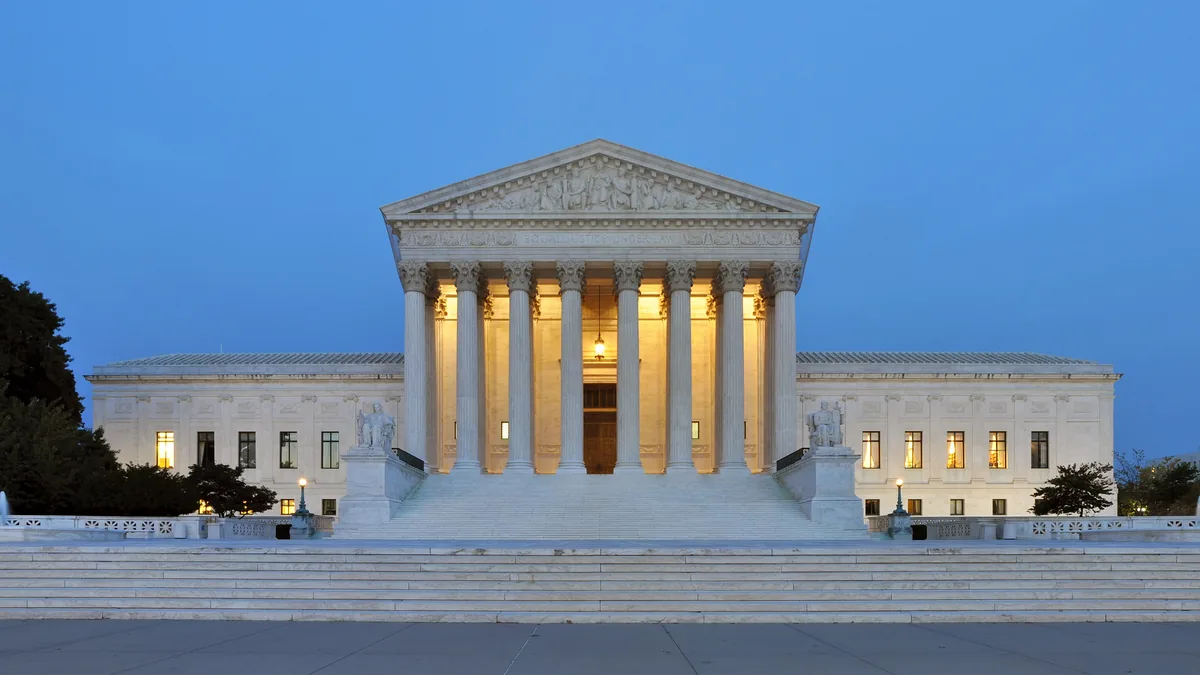
In Plyler v. Doe, 457 U.S. 202 (1982), the U.S. Supreme Court held that states cannot deny free public K-12 education to children based on immigration status. Because of this decision, a public school cannot:
- Deny enrollment to a child because of the child’s or parents’ immigration status.
- Ask questions or require documents designed to reveal immigration status as a condition of enrollment.
- Discourage a child from enrolling or attending, or treat them differently, because of status.
The U.S. Department of Education and Department of Justice have issued joint guidance reminding every public school of these obligations — the full enrollment walkthrough, including the documents question and the July-August registration timeline, is in our school enrollment guide.
What a school can — and cannot — require
A school may ask for:
- Proof of age (and must accept reasonable alternatives if you don’t have a particular document). The age rules themselves — the kindergarten cutoff and how late free school runs — vary by state: statute-verified table for all 50 states + DC.
- Proof that you live in the district (a lease, utility bill, or similar).
A school cannot:
- Require a Social Security number to enroll.
- Require a green card, visa, or other proof of immigration status.
- Refuse enrollment because a child lacks a birth certificate or a specific ID — alternatives must be accepted (foreign birth certificates are fine; see vital records by state for US-born children’s certificates).
- Bar a child from enrolling because a parent chooses not to provide a document that reveals status.
If a school asks for something on this “cannot” list, point to the federal guidance, ask for the district enrollment office, or contact a legal-aid or civil-rights organization.
ICE and schools — the 2025-26 reality
The federal “protected areas” policy that discouraged enforcement at schools was rescinded in January 2025 (the policy history). What protects students was never that memo, and it remains:
- Schools do not have status information. Plyler-compliant districts never collected it — there is nothing in the enrollment file that says “undocumented.”
- FERPA bars releasing student records without parental consent or a judicial order/subpoena.
- School interiors are non-public areas. Beyond the front office, officers need a judicial warrant or district consent to enter — the same judicial vs administrative warrant distinction that governs homes and workplaces.
- District protocols are the practical layer. Through 2025-26, many districts adopted written procedures: front-office staff accept no documents at face value, route any officer to the superintendent’s office and counsel, and do not release students or information while verification happens. Ask your district for its written protocol — its existence is a fair question at any school board meeting.
- Parent hygiene that matters: keep the emergency-contact and authorized-pickup lists current (include a trusted adult with secure status), and make sure the school can reach someone if a parent is detained — the family preparedness plan and the first-48-hours playbook cover the rest.
Attendance itself remained the safest choice: enforcement at schools stayed rare through 2025-26, and a child out of school loses the one entitlement no policy change can take.
Student privacy (FERPA)
The federal Family Educational Rights and Privacy Act protects student education records. Schools generally cannot release records — including anything that could reveal status — to immigration authorities without parental consent or a court order. Directory-information opt-outs (forms districts send each fall) let parents restrict even name/address sharing; opting out is reasonable for mixed-status families.
English-learner rights — for students and parents
- Under Lau v. Nichols, 414 U.S. 563 (1974), and the Equal Educational Opportunities Act, schools must give English-learner students real language support to access the curriculum.
- Schools must communicate essential information to parents in a language they understand — enrollment, discipline, special education, report cards. Ask for documents and meetings in Spanish; interpreters at parent-teacher conferences are part of the obligation.
- For the parents’ own English: free and low-cost adult ESL classes exist in every state — our learn English by state directory lists programs with real provider data.
Students experiencing homelessness (McKinney-Vento)
The McKinney-Vento Act protects children in unstable housing — doubled-up with relatives, in shelters, in motels — which describes many newly arrived families:
- Immediate enrollment even without the usual documents (no lease, no records from the prior school).
- The right to stay in the same school when the family moves, with transportation provided.
- Every district has a homeless liaison — ask for them by that title; they cut through enrollment problems quickly.
- Free school meals are automatic for McKinney-Vento students.
College and tuition — the state map moved in 2025-26
- There is no federal law barring undocumented students from attending most colleges and universities.
- In-state tuition: as of September 24, 2026, 18 states plus DC offer resident tuition to undocumented students who meet state criteria (years of state high-school attendance, graduation, affidavits). Federal litigation ended in-state access in Texas, Kentucky, Oklahoma, Nebraska, Illinois, and Kansas between June 2025 and September 2026 — a sharp reversal in states with large affected populations.
- State financial aid exists in a smaller set of states; federal aid (FAFSA) is unavailable to undocumented students, though DACA holders and others should still check institutional aid.
- Private scholarships without status requirements are the most underused resource — our dreamer scholarships and tuition directory tracks every state’s current tuition rule and scholarship list, kept against the litigation tracker.
What to do if a school violates these rights
- Ask to speak with the district enrollment office and reference the federal guidance.
- Ask for the homeless liaison if housing is the obstacle.
- Contact a legal-aid or civil-rights organization — see legal aid by state.
- File a complaint with the U.S. Department of Education Office for Civil Rights or the DOJ Civil Rights Division (civilrights.justice.gov).
Related information
- School enrollment — the full walkthrough
- Dreamer scholarships and tuition by state
- Learn English by state — adult ESL directory
- US-citizen children of undocumented parents
- Sensitive locations — the policy history
- Family preparedness plan
- Legal aid by state
Last verified: 2026-09-24. General information, not legal advice. State tuition rules changed repeatedly in 2025-26 and district protocols vary — verify your state’s current rule in the by-state directory and your district’s written protocol directly.