Tenant and housing rights — for renters, regardless of immigration status
Most tenant protections in the United States attach to your status as a renter, not your immigration status. You generally have the right to a court process before eviction, to housing that is safe and livable, to be free from national-origin discrimination — and, in a growing list of states, to sue a landlord who weaponizes your immigration status. This page covers the core rights, the ICE-threat laws, renting with an ITIN, and subsidized housing for mixed-status families.
This is general information, not legal advice. Tenant law is largely state and local — check your state’s rules and, for a specific problem, contact a legal-aid or fair-housing office.
You cannot be evicted without a court process
In nearly every state, a landlord who wants to remove a tenant must:
- Give the tenant proper written notice (the amount depends on the reason and your state).
- File an eviction case in court if the tenant does not leave.
- Win a court order — only then can a sheriff or marshal carry out the removal.
What a landlord generally cannot legally do (illegal “self-help” eviction in most states):
- Change the locks or physically remove you.
- Throw out or hold your belongings.
- Shut off your heat, water, electricity, or gas to force you out.
- Threaten or harass you to make you leave.
Your immigration status does not remove these protections. You are entitled to notice and a court process like any other tenant, you can raise defenses in court — and appearing in housing court is a state civil matter (see the state-courthouse shield laws on the ICE at courthouses page).
“I’ll call ICE” — when the threat itself is illegal
A landlord using immigration status as a weapon — to silence repair complaints, to keep a deposit, to push a family out without court — is the most common abuse mixed-status renters report. The legal landscape:
- California — AB 291 (2017): landlords may not disclose or threaten to disclose immigration status to harass, intimidate, retaliate, or recover possession; attorneys face discipline for the same; tenants have remedies including civil penalties.
- Illinois — Immigrant Tenant Protection Act (2019, 765 ILCS 750): prohibits status-based threats and evictions and gives tenants a private right of action (you can sue).
- Washington, Colorado, New York and others have protections by statute or case law, and many cities add their own.
- Everywhere: status-based harassment can be national-origin discrimination under the federal Fair Housing Act, and retaliation for asserting tenant rights is independently unlawful in most states.
What to do: save every text and voicemail, write down dates and witnesses, and take the file to a fair-housing organization or legal aid. The threat that was meant to silence you can become the strongest claim in your case.
Protection from housing discrimination
The federal Fair Housing Act prohibits discrimination based on national origin, race, color, religion, sex, familial status, and disability — refusing to rent, different terms, or harassment because of your country of origin, accent, or ethnicity. To file a complaint:
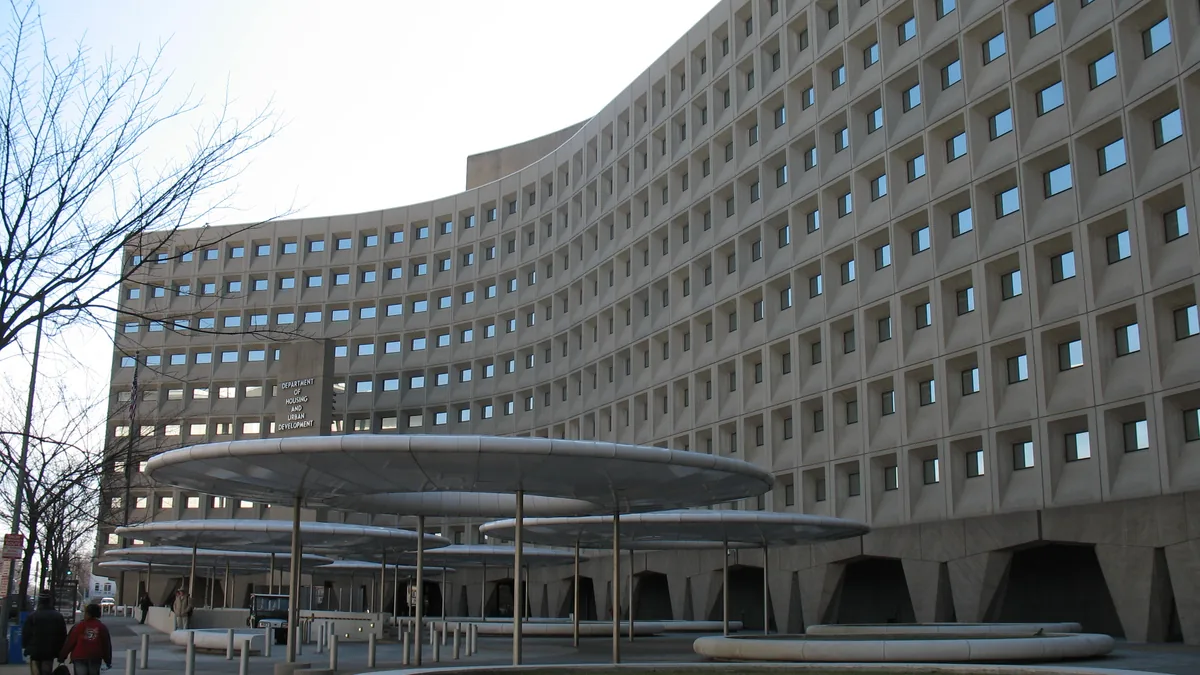
- HUD Office of Fair Housing and Equal Opportunity: hud.gov/fairhousing or 1-800-669-9777 (Spanish available). HUD does not ask complainants about immigration status.
- A local fair-housing organization or legal-aid office — and our HUD field offices by state directory lists the regional offices.
Renting without a Social Security number
No federal law requires an SSN to rent:
- Many landlords accept an ITIN, a passport, or a matrícula consular for identity, plus pay stubs or bank statements for income.
- An ITIN credit history opens doors with larger property managers — see building credit with an ITIN and ITIN banking by state.
- Higher deposits in lieu of credit history are common and lawful in most states (within state deposit caps); blanket refusals aimed at national origin are not.
- For what typical rent looks like in your area, our housing by state pages carry real HUD Fair Market Rent tables for every state.
Mixed-status families and subsidized housing
Long-standing federal rule, worth knowing precisely: Section 214 of the Housing and Community Development Act (implemented at 24 CFR 5.520) allows mixed-status families to live in public housing and Section 8 with prorated assistance — the subsidy covers the eligible members (citizen children, LPRs), and the ineligible members simply are not subsidized. Eligible children do not lose housing because of the parents’ status. Proposals to restrict mixed-status households resurfaced in 2025-26 — verify the current rule with your housing authority before withdrawing from a program out of fear, and ask a legal-aid office to confirm anything a housing authority letter claims.
The right to safe, livable housing
Most states recognize an implied warranty of habitability: working heat, plumbing, and electricity; structural safety; compliance with housing codes. If a landlord ignores essential repairs, many states give remedies (repair-and-deduct, rent withholding) — with strict procedures, so confirm your state’s rules or get legal advice before withholding rent. Report serious violations to your local code-enforcement department; in most places code complaints do not ask about status, and several states make code-complaint retaliation unlawful.
Security deposits
State law controls how much can be charged and how quickly it must be returned (often with an itemized list). Protect yourself:
- Dated photos of the unit when you move in and out.
- Keep the lease, receipts, and all messages.
- Give a forwarding address in writing when you leave.
What to do if you have a problem
- Do not move out just because a landlord tells you to — wait for proper notice and, if needed, the court process.
- Document everything: notices, texts, photos, names, dates.
- Get help early — eviction cases move fast. Free tenant hotlines, legal aid by state, and fair-housing centers exist in most areas.
Related information
- Housing by state — real Fair Market Rent data
- HUD field offices by state
- Building credit with an ITIN
- ICE at courthouses — housing court and shield laws
- US-citizen children — the benefits they keep
- Family preparedness plan
- Legal aid by state
Last verified: 2026-06-11. General information, not legal advice. Tenant law varies widely by state and city — for your specific situation, contact a local legal-aid office, tenant union, or licensed attorney.