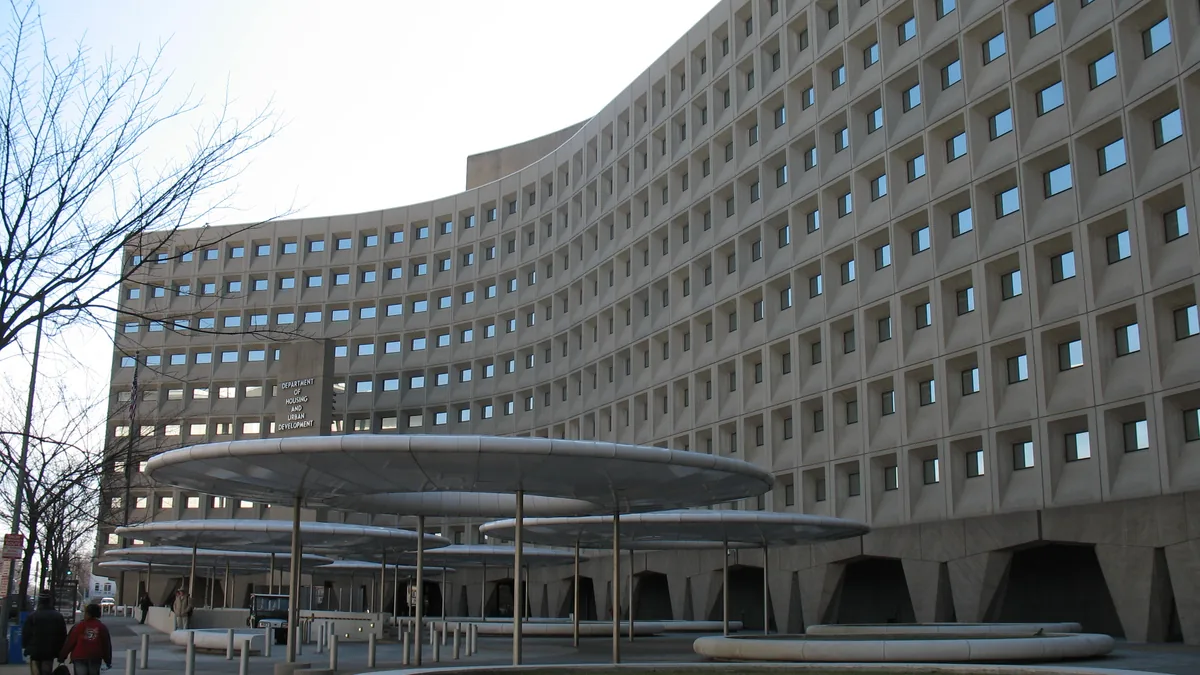
HUD field offices in the US
Federal HUD offices that handle housing assistance, fair housing complaints, FHA loans, and Section 8 in each state.
Browse by state
- Alabama — 1 HUD office
- Alaska — 1 HUD office
- Arizona — 1 HUD office
- Arkansas — 1 HUD office
- California — 3 HUD offices
- Colorado — 1 HUD office
- Connecticut — 1 HUD office
- Delaware — 0 HUD offices
- District of Columbia — 2 HUD offices
- Florida — 2 HUD offices
- Georgia — 1 HUD office
- Hawaii — 1 HUD office
- Idaho — 1 HUD office
- Illinois — 1 HUD office
- Indiana — 0 HUD offices
- Iowa — 1 HUD office
- Kansas — 1 HUD office
- Kentucky — 1 HUD office
- Louisiana — 1 HUD office
- Maine — 0 HUD offices
- Maryland — 1 HUD office
- Massachusetts — 1 HUD office
- Michigan — 1 HUD office
- Minnesota — 1 HUD office
- Mississippi — 1 HUD office
- Missouri — 2 HUD offices
- Montana — 1 HUD office
- Nebraska — 0 HUD offices
- Nevada — 0 HUD offices
- New Hampshire — 1 HUD office
- New Jersey — 1 HUD office
- New Mexico — 0 HUD offices
- New York — 3 HUD offices
- North Carolina — 1 HUD office
- North Dakota — 0 HUD offices
- Ohio — 2 HUD offices
- Oklahoma — 0 HUD offices
- Oregon — 2 HUD offices
- Pennsylvania — 3 HUD offices
- Puerto Rico — 1 HUD office
- Rhode Island — 1 HUD office
- South Carolina — 0 HUD offices
- South Dakota — 1 HUD office
- Tennessee — 3 HUD offices
- Texas — 3 HUD offices
- Utah — 1 HUD office
- Vermont — 1 HUD office
- Virginia — 2 HUD offices
- Washington — 1 HUD office
- West Virginia — 1 HUD office
- Wisconsin — 1 HUD office
- Wyoming — 0 HUD offices
Recent fee, deadline, and contact context (2025-2026)
The U.S. Department of Housing and Urban Development (HUD) had $87.2 billion in net budget authority in FY 2025, roughly $63 billion of it rental assistance: Tenant-Based Rental Assistance including Section 8 Housing Choice Vouchers ($36.1 billion, serving approximately 2.4 million families), Project-Based Rental Assistance ($16.9 billion), Public Housing ($8.8 billion), Housing for the Elderly (Section 202, $908 million), and Housing for Persons with Disabilities (Section 811, $257 million). Community Development Block Grant entitlement and non-entitlement grants were $3.3 billion. Fair market rent (FMR) standards are published annually in late summer and take effect October 1 of the fiscal year they name (FY 2026 FMRs were published August 22, 2025, effective October 1, 2025); verify your county’s FMR at huduser.gov/fmr.
Fair Housing Act enforcement: many administrative complaints are handled not by HUD directly but by the 74 state and local Fair Housing Assistance Program (FHAP) agencies — 34 states and 40 localities including the District of Columbia. HUD reports that “In 2025, FHAP agencies processed 6,479 fair housing complaints and obtained monetary relief totaling $7.5 million”, alongside public-interest relief such as revised nondiscrimination policies, outreach, and fair housing training. You have one year from the alleged discriminatory act to file a complaint with HUD (24 CFR 103.35; 42 U.S.C. 3610(a)(1)(A)(i)) — and if the discrimination was continuing, the year runs from the last incident. A separate private lawsuit in federal or state court has its own, longer deadline: two years from the occurrence or termination of the practice (42 U.S.C. 3613(a)(1)(A)), and you do not have to file with HUD first. Those two clocks do not run against each other: the two-year lawsuit period does not count any time a HUD or FHAP administrative proceeding on the same practice was pending (42 U.S.C. 3613(a)(1)(B)), so a long agency investigation does not eat your right to sue — the one exception is a case arising from breach of a conciliation agreement. Contact HUD’s Office of Fair Housing and Equal Opportunity (FHEO) toll-free at 1-800-669-9777 (TTY 1-800-927-9275) or file online at hud.gov/fairhousing. The USCIS Form I-9 (Employment Eligibility Verification) and IRS Form W-2 are NOT required for fair-housing complaints — HUD says anyone harmed by a discriminatory housing practice may file.
Section 8 voucher waitlists are long: HUD itself advises that, because of high demand and long waiting lists, you may need to apply to several Public Housing Agency waitlists. Under 24 CFR 982.206(c), a PHA may stop accepting new applications once it determines that its existing list holds an adequate pool for the program funding it has. Mixed-status family proration: assistance is calculated based on eligible household members only; ineligible members (undocumented adults) are counted in household composition but receive no portion of the subsidy. CHIP and Medicaid eligibility for children in mixed-status families is separate from Section 8 — see /benefits/chip/ and /benefits/medicaid/.