
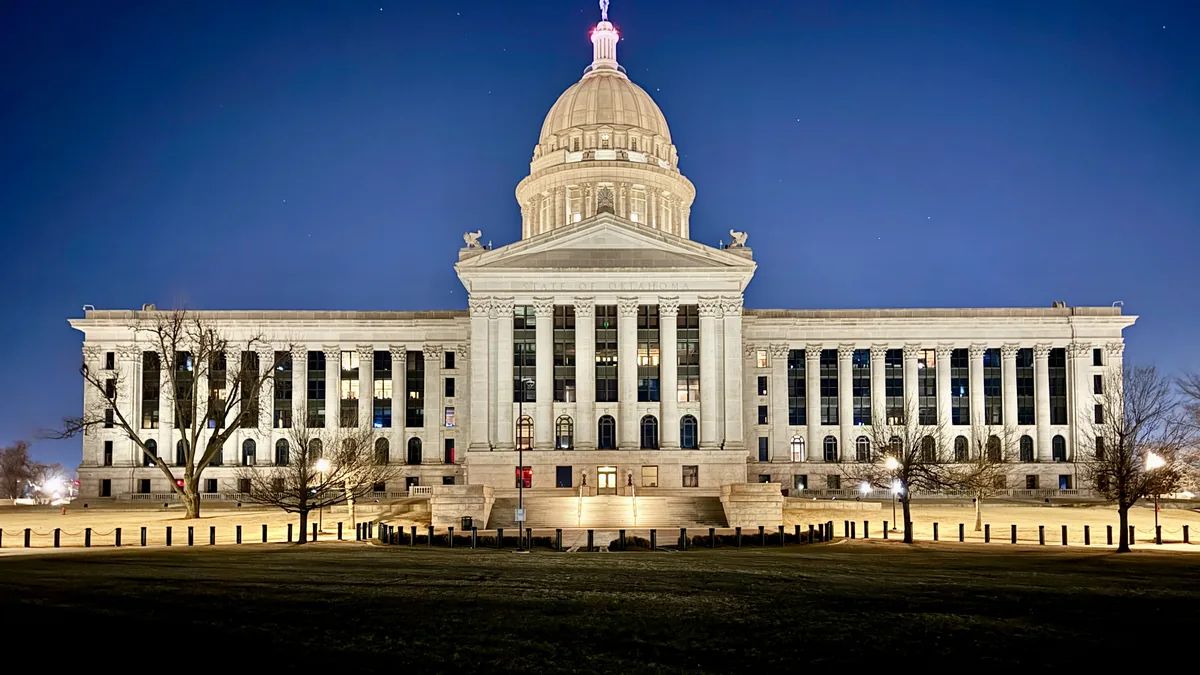
LSC-funded civil legal aid in Oklahoma
The Legal Services Corporation (LSC) is a non-profit established by Congress in 1974 (Legal Services Corporation Act, 42 U.S.C. § 2996) to fund civil legal aid for low-income Americans. LSC funds 2 grantee organizations serving Oklahoma, providing free civil legal services to people who cannot afford a lawyer.
Oklahoma LSC service statistics
- LSC-eligible population in Oklahoma: approximately 772,655 people (20.2% of state population at or below 125% Federal Poverty Level) — 2018 American Community Survey
- Cases closed, 2018 LSC Grantee Activity Reports: 8,918 (state aggregate across all Oklahoma LSC grantees)
- Cases handled per 10,000 LSC-eligible residents (2018): 115.4
LSC grantee organizations in Oklahoma
| Organization | LSC profile | Eligible population (2018) | Cases closed (2018) |
|---|---|---|---|
| Legal Aid Services of Oklahoma, Inc. | profile | 772,655 | 8,918 |
| Oklahoma Indian Legal Services, Inc. (Native American Basic Field grantee; LSC’s service-area map feed carries no 2018 figures for it) | profile | — | — |
LSC eligibility requirements
LSC programs serve households with income at or below 125% of the federal poverty guidelines — under LSC’s income guidelines for the 48 contiguous states and DC, that’s:
- 1 person: $19,950
- 2 persons: $27,050
- 3 persons: $34,150
- 4 persons: $41,250
- Alaska and Hawaii have higher limits (45 CFR Part 1611, Appendix A).
Under 45 CFR 1611.5, some applicants with income up to 200% of the poverty guidelines can qualify under authorized exceptions. Asset limits also apply (vary by program).
Civil matters LSC programs typically handle
- Housing: eviction defense, public housing access, fair housing complaints, foreclosure prevention
- Family law: divorce, child custody, child support, domestic violence protective orders, name change
- Public benefits: SNAP, TANF, Medicaid eligibility appeals, SSDI denials
- Consumer: debt collection defense, predatory lending, payday loan disputes, identity theft
- Employment: wage theft, unemployment-benefits appeals, wrongful termination
- Healthcare: Medicare appeals, healthcare access
- Elder law: advance directives, elder abuse intervention
- Education: special education advocacy, school discipline
LSC programs typically do NOT handle: criminal defense (that’s public defender), immigration COURT representation (see /procedures/bia-recognized-help-by-state/oklahoma/), class-action lawsuits, prisoner litigation (limited), abortion-related (restricted by 45 CFR 1610).
Related procedural information
- BIA-recognized immigration legal help in Oklahoma — free immigration representation
- Find an immigration attorney — AILA directory + private bar
- Legal aid by state (broader directory) — non-LSC civil legal aid
- Find a notary public (NOT a notario) — avoid notario fraud
- Know Your Rights — constitutional protections
Last verified: 2026-09-24. Source: Legal Services Corporation grantee database (lsc.gov/grants/our-grantees). General procedural information — not legal advice. LSC eligibility rules and grantee organizations change; verify before applying.
Recent fee, deadline, and contact context (2025-2026)
The Legal Services Corporation (LSC) received approximately $560 million in federal appropriations for FY 2025. LSC grantees closed more than 771,000 cases nationally in 2025 and served more than 1.8 million clients and their household members (LSC report release, July 29, 2026). The Federal Poverty Level (FPL) threshold updates each January — verify current LSC income eligibility at lsc.gov/about-lsc.
LSC funding restrictions under 45 CFR 1626 limit LSC-funded organizations from representing certain non-citizens in most civil matters. Section 504(a)(11) of LSC’s FY 1996 appropriations act (Public Law 104-134), carried forward in each annual appropriation since, established these restrictions. Many LSC grantees operate parallel non-LSC funded programs that serve a broader population.
For LSC grantee questions: Legal Services Corporation, 1825 I Street NW, Suite 800, Washington, DC 20006, 202-295-1500. For suspected fraud at an LSC grantee: the LSC Office of Inspector General’s Fraud Hotline, 1-800-678-8868. The LSC IG (Office of Inspector General) at oig.lsc.gov investigates fraud.
LawHelp.org, a program of the national nonprofit Pro Bono Net, provides referrals to nonprofit legal aid organizations in every state and territory, free legal-rights resources, court forms and self-advocacy tools. Self-help court forms and procedural guidance for unrepresented litigants. Find your state’s page at lawhelp.org/find-help.