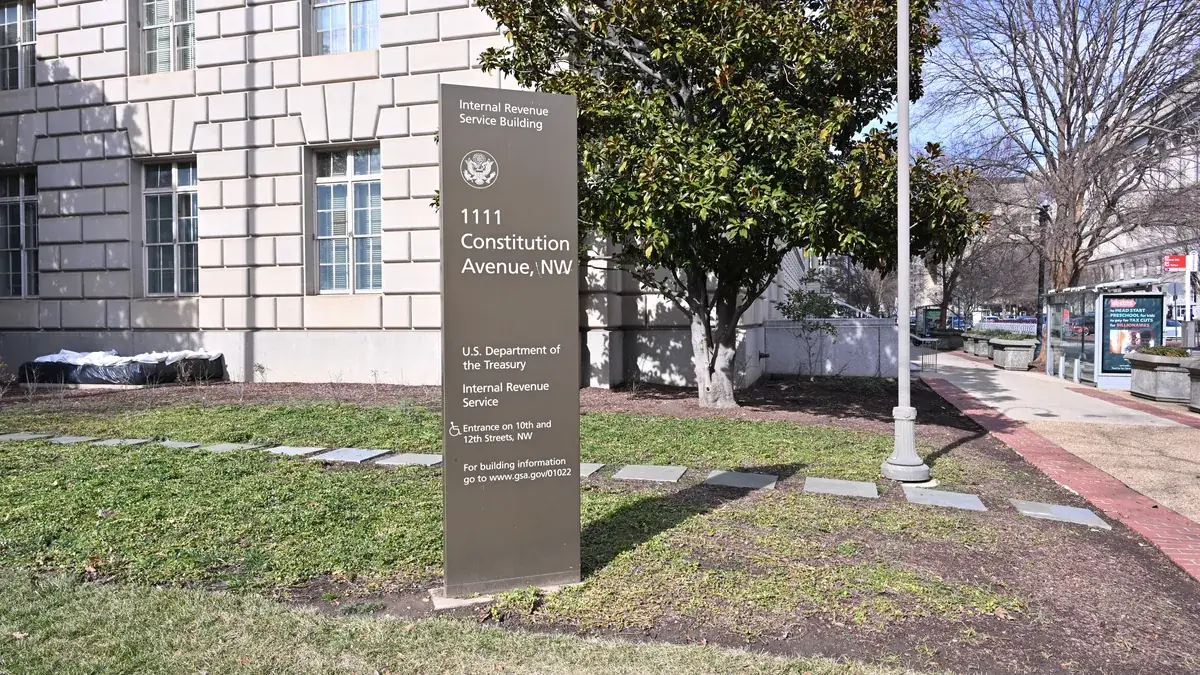
IRS CP2000 — Underreporter Notice (Income Mismatch)
IRS CP2000 means income or payment information the IRS received from third parties, such as employers or financial institutions, doesn’t match your return. It proposes changes that may increase or decrease your tax or not change it. Reply by the date listed on the notice.
What to do
- Review IRS proposed change vs your records. 2. AGREE: sign + return + pay. 3. DISAGREE: provide documentation rebutting (W-2 was wrong, 1099 was duplicate, etc.). 4. Get CPA help — common issue, easily disputed if info wrong. 5. NEVER ignore — becomes formal assessment with collection action.
Common scams to avoid
⚠️ Always verify letter is legitimate BEFORE acting:
- IRS NEVER asks for payment in bitcoin, gift cards, instant transfer
- USCIS/IRS do NOT threaten deportation by phone
- Verify case number at egov.uscis.gov or irs.gov/account
- Call OFFICIAL number from uscis.gov/irs.gov — NOT the number on suspicious letter
Resources
- USCIS Case Status: egov.uscis.gov
- IRS Account: irs.gov/account
- Report USCIS scam: uscis.gov/avoid-scams
- Report IRS scam: 1-800-366-4484
Related information
Last verified: 2026-10-15.
General information — not legal advice. Consult attorney or CPA with ITIN/immigration experience.
Related procedural information
- ITIN — file federal taxes without SSN — required for federal and most state filings
- ITIN-friendly business banking — for self-employment income
- Form an LLC to structure business income — pass-through tax treatment under ITIN
- Driver’s license requirements by state (DMV) — residency for state tax purposes
- Find legal help for tax issues — VITA + low-income tax clinics
Recent IRS notice code context (2025-2026)
IRS notices include the CP series (computer-generated routine notices) and the Letter series (manually-generated complex notices). Common notices for immigrant taxpayers: CP01 (identity theft confirmation), CP14 (balance due), CP14H (Shared Responsibility Payment for missing health coverage 2014-2018 tax years), CP501 (first reminder), CP2000 (underreporter notice — third-party income or payment information doesn’t match your return; the IRS says the difference may increase or decrease your tax or not change it), Letter 5821 (ITIN expiring).
For CP14/CP501 balance-due notices, apply for a payment plan online at irs.gov/payments or call the toll-free number printed on your notice. Short-term plans (180 days or less) have a $0 setup fee, but penalties and interest keep accruing until the balance is paid: the failure-to-pay penalty is 0.5% of the unpaid tax per month, and interest runs at the IRS’s quarterly underpayment rate (irs.gov/payments/quarterly-interest-rates). Long-term installment agreements (IRS, irs.gov/payments/payment-plans-installment-agreements, read Sept. 10, 2026): with direct debit, $29 online / $107 by phone, mail or in person, and the setup fee is waived for low-income filers; without direct debit, $69 online / $178 by phone, mail or in person, and $43 for low-income filers (which may be reimbursed if certain conditions are met). Offer in Compromise (settle for less than full balance): the IRS says every application requires a $205 application fee and a first payment (20% of the offer amount for lump-sum offers) unless you meet the low-income qualifications; if you apply and are not eligible, the IRS returns the application and fee, and your payments are applied to your tax debt.
For CP2000 (underreporter): the IRS says to reply by the date listed on the notice — if a response form is included, complete and sign it, state whether you agree or disagree, and include any supporting documentation; the notice is not a bill. If the IRS does not hear from you by the response date, it sends a Statutory Notice of Deficiency (the 90-day letter, such as a CP3219A); to challenge it in the U.S. Tax Court you must file a petition by the date listed on that notice. Free help: VITA sites (freetaxassistance.for.irs.gov/s/sitelocator), Low Income Taxpayer Clinics (LITCs at irs.gov/litcmap), Tax Court Pro Bono Program. IRS Form 656 (Offer in Compromise), with the Form 656-B booklet, at irs.gov/forms-pubs/about-form-656.
For ITIN expiration (Letter 5821): renew with Form W-7, checking the box “Renew an existing ITIN” — the Form W-7 instructions say a renewal application must include a U.S. federal tax return unless you meet an exception, so it goes in with the return that needs the ITIN. Allow about 7 weeks for the IRS to notify you, or 9-11 weeks in tax season (January 15 to April 30) or from overseas. Per IRS Topic 857, an ITIN assigned before 2013 that was never renewed is expired. The rule that can still expire your ITIN is the rolling one the IRS publishes today: if an ITIN is not used on a U.S. federal tax return for any 3 consecutive tax years, it expires on December 31 after the third year of non-use (irs.gov/tin/itin/renew-an-itin, read Sept. 10, 2026). An ITIN used only on information returns such as a Form 1099 does not need renewing. Verify renewal status at the Austin Service Center (ITIN Operations).